

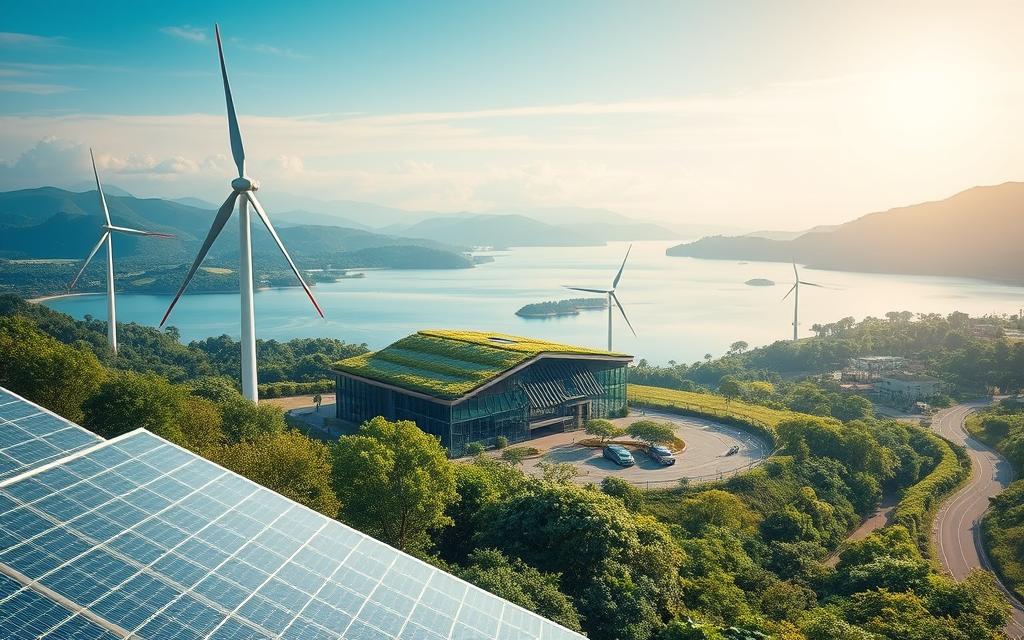
Our world is facing big ecological challenges. We need new ways to tackle these problems. Environmental technology is our best hope for a sustainable future.
Green tech or clean tech is another name for environmental technology. It includes tools and methods to lessen our harm to nature. These solutions are found in many areas like energy, transport, and farming.
The main idea is to create technologies that help our planet, not hurt it. This includes things like renewable energy and ways to reduce waste. These innovations help us care for the environment better.
This introduction shows how environmental technology can change how we interact with nature. The next parts will look at how these technologies work in real life.
Defining Environmental Technology
Environmental technology is our effort to use technology in a way that protects the planet. It includes tools and methods to reduce harm to the environment. This helps us move towards a more sustainable future.
This field focuses on solving problems like pollution and conserving resources. It covers areas like energy, waste, water, and air quality. These innovations help us live in a cleaner, healthier world.
The Core Principles of Environmental Technology
Environmental technology is based on key principles. These principles guide how we develop and use green technologies.
Sustainability is the main principle. It means our technologies should meet today’s needs without harming future generations. We use renewable resources and aim for systems that last forever.
Related Posts:





Resource efficiency is another important principle. It’s about getting the most out of what we use while wasting less. This means using less energy, water, and materials.
Pollution prevention and protecting nature are also key. These principles help us stop pollution at its source or fix damaged environments.
| Principle | Key Focus | Common Applications |
|---|---|---|
| Sustainability | Long-term viability | Renewable energy systems |
| Resource Efficiency | Input-output optimisation | Energy-efficient buildings |
| Pollution Reduction | Contamination prevention | Emission control systems |
| Ecological Preservation | Ecosystem protection | Habitat restoration tech |
The Evolution of Environmental Technology
The history of green technology is long and fascinating. It shows how humans have always tried to live in harmony with nature. Even ancient societies used advanced environmental technologies.
For example, ancient people used hot springs for heating and wind to move boats. The Greeks even used the sun to light fires with magnifying glasses.
The industrial era brought big changes, both good and bad. It led to pollution but also to the creation of early pollution control devices. This was the start of our modern environmental efforts.
Today, we build on this history with new technologies. We use digital tools and advanced materials to make our solutions better. This shows how much we’ve learned about taking care of our planet.
Renewable Energy Systems
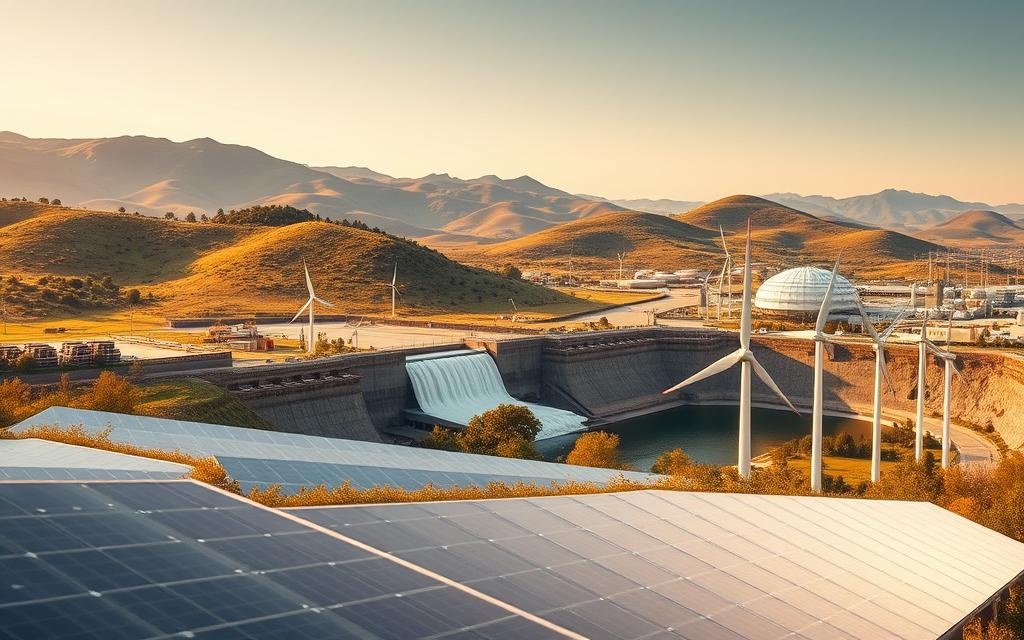
Modern renewable energy solutions are changing how we power our world. They aim for a cleaner, more sustainable future. These technologies use natural resources without harming them, giving us good alternatives to fossil fuels.
Solar Power Innovations
Solar power technology is getting better fast. It’s now more efficient and easier to use. Solar panels turn sunlight into electricity better than before, and solar farms can power whole communities.
Companies like Sunrun and ADT Solar offer tools to track energy use in real-time. This helps homeowners and businesses use energy wisely and save money.
New ideas include solar panels that look like roofing or windows. These ideas make solar energy look good and work well in cities.
Wind Energy Advancements
Wind energy systems have grown bigger and better. Modern turbines catch more wind energy and turn it into electricity with little harm to the environment.
Big wind farms now give over 6% of the world’s electricity. For cities, companies like New World Wind make smaller turbines for buildings.
The biggest problem is wind’s unpredictable nature. But, better forecasting and energy storage help make wind power more reliable for the grid.
Hydroelectric and Tidal Power
Hydroelectric power is a well-known renewable source. It uses water flow to make electricity through dams and turbines, giving steady power.
Tidal power is a new tech that uses ocean tides. It’s not as developed as others, but it offers energy that comes from the moon’s cycles.
Both face issues about how they affect the environment. But, new designs try to lessen these effects while making more energy.
| Energy Type | Key Advantage | Current Usage | Notable Innovators |
|---|---|---|---|
| Solar Power | Scalable from home to city level | Rapidly growing globally | Sunrun, ADT Solar |
| Wind Energy | High energy yield per turbine | 6% of global electricity | New World Wind |
| Hydroelectric | Consistent power generation | Established technology | Various utility companies |
| Tidal Power | Predictable energy source | Emerging technology | Research institutions |
These renewable energy solutions work together for a strong, diverse power system. Each one brings its own strengths to help us reach sustainable energy.
Sustainable Water Management
Managing water effectively is a big challenge for our planet. New technologies are helping to save our most precious resource. These systems help with water scarcity, improve quality, and cut energy use in many areas.
Advanced Water Purification
Modern water purification systems have changed how we treat and reuse water. They use advanced methods to remove harmful substances. Companies like Evoqua Water Technologies lead with systems that make wastewater safe for reuse.
These systems include membrane filtration, ultraviolet disinfection, and advanced oxidation processes. They get rid of microplastics, drugs, and other pollutants that old methods miss.
Using these systems lets communities recycle water for drinking, industry, and farming. This reduces the need for fresh water and keeps people healthy.
Smart Irrigation Systems
Agriculture uses about 70% of the world’s freshwater, making water use key. Smart irrigation technology helps by using precision watering that responds to the environment.
These systems use sensors, weather data, and controls to water plants only when needed. Companies like Badger Meter offer solutions to monitor water quality and use.
These systems save water, improve crop yields, and lower energy costs. Farmers can make better decisions with detailed analytics on mobile apps.
| Irrigation Technology | Water Savings | Implementation Cost | Suitable Regions |
|---|---|---|---|
| Drip Irrigation Systems | 30-50% | Medium | Arid climates |
| Soil Moisture Sensors | 20-40% | Low | All agricultural zones |
| Weather-Based Controllers | 15-35% | Medium | Variable climate regions |
| Smart Sprinkler Systems | 25-45% | High | Large-scale farms |
Greywater and Rainwater Harvesting
Greywater recycling systems use water from showers, sinks, and laundry for non-drinking uses. This reduces household water use by reusing water that would be wasted.
Rainwater harvesting collects rainwater from roofs and surfaces. It’s used for irrigation and commercial needs, depending on treatment.
Both systems are great for areas with little water, cutting down on municipal water use and bills. They include filters and storage for quality and reliability all year.
Starting these systems costs money upfront but saves money and the environment in the long run. Many places offer help to install these systems, seeing their value in managing water sustainably.
Waste Management and Recycling Technologies
Modern societies face big challenges in managing waste and protecting the environment. The United States alone sent 292 million tons of garbage to landfills in 2018. This shows we need new solutions fast. Luckily, new technologies are changing how we deal with waste, turning problems into chances for growth.
Advanced Sorting and Processing
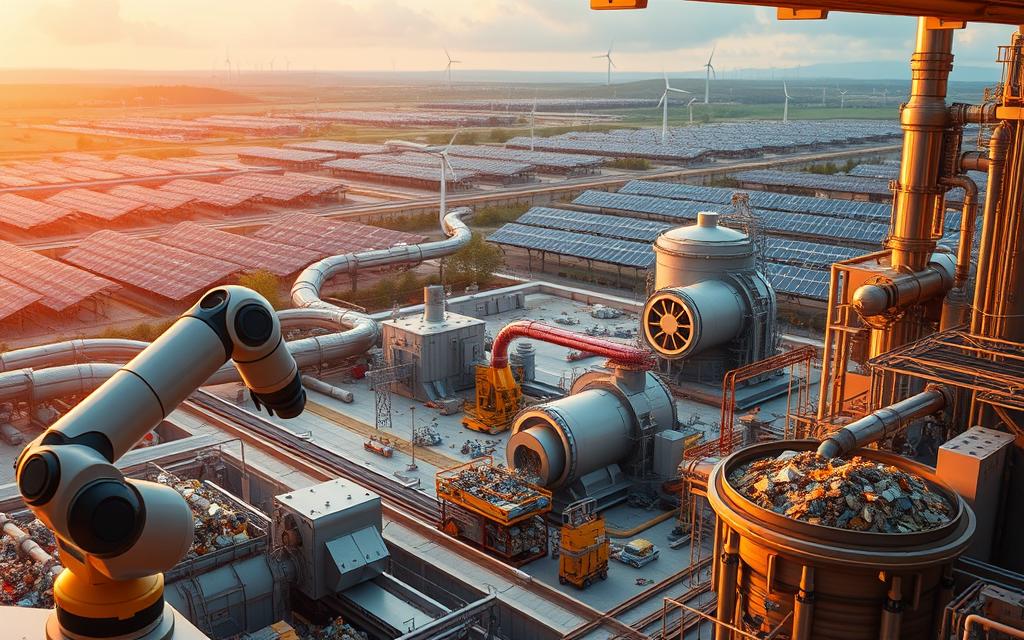
New sorting technologies have made recycling better and cut down on waste. Optical sorters, AI, and robots now sort materials with great accuracy. These recycling innovations help get better materials and make recycling more profitable.
Companies like Full Cycle are making plastics into biodegradable stuff. Footprint also makes plastic alternatives from fibre, helping us use less traditional plastics. These steps are big wins for waste management technology and the circular economy.
Composting and Anaerobic Digestion
Biological methods offer natural ways to handle organic waste. Modern composting systems speed up decomposition, making good soil for farms. This cuts down on landfill waste and makes soil better.
Anaerobic digestion breaks down organic waste into biogas, a clean energy source. This process also makes a nutrient-rich fertiliser. It’s a full circle of using resources wisely.
Waste-to-Energy Conversion
Thermal conversion turns waste into energy. Modern waste-to-energy plants burn waste safely, making electricity and reducing waste. They also have special systems to keep pollution low.
The energy making process includes:
- Waste reception and preparation
- Controlled burning at high temperatures
- Heat recovery through steam generation
- Electricity production via turbine systems
- Advanced air pollution control
This method helps reduce waste and makes energy, making communities more sustainable. The tech keeps getting better, with less pollution.
| Technology Type | Primary Function | Key Benefits | Implementation Scale |
|---|---|---|---|
| Advanced Sorting Systems | Material separation and recovery | Reduces contamination, improves recycling rates | Municipal and industrial facilities |
| Anaerobic Digestion | Organic waste processing | Produces biogas and fertiliser | Agricultural and municipal operations |
| Thermal Conversion | Energy generation from waste | Reduces landfill volume, produces electricity | Large-scale regional facilities |
| Composting Systems | Organic material breakdown | Creates soil amendments, reduces methane | Residential to commercial scale |
These technologies offer a complete solution to waste management. They show how innovation can turn environmental problems into chances for a better future.
Green Building and Construction
The construction sector is a big source of global carbon emissions, making green building technology key for saving our planet. Today, buildings are being made to not only use less energy but also to make energy. They also save resources and make people feel better.
Sustainable Materials
Traditional concrete making is a big source of CO₂ emissions, about 8% of the world’s total. Now, we’re using new materials that cut down on emissions a lot. Bamboo is a fast-growing option that’s ready in just three to five years, unlike timber which takes decades.
Hempcrete, made from hemp and lime, is a carbon-negative insulation that absorbs CO₂. Using recycled steel needs 75% less energy than making new steel. And, new concrete types can reduce emissions by up to 80% compared to old methods.
These sustainable construction materials show how we can turn waste into useful building parts and cut down on carbon.
Energy-Efficient Design
Designing buildings smartly is also important for saving energy. Passive house designs can cut heating and cooling needs by up to 90%. This is done by using the right design, lots of insulation, and keeping the building tight.
Using triple-glazed windows with argon gas, special insulation, and systems that recover heat keeps buildings warm or cool with little energy. LED lights that adjust based on how much natural light there is also help save energy.
Systems that use the earth’s temperature for heating and cooling are another way to save energy. These systems make buildings very energy-efficient, needing hardly any energy to stay comfortable all year.
Smart Building Management Systems
The digital world has changed how we build and manage buildings. Smart building systems use sensors, actuators, and AI to make buildings work better in real-time.
Companies like Prescriptive Data use data to adjust building systems automatically. They look at how many people are around, the weather, and energy prices. They also use sensors to turn off lights when no one is there and predict when equipment might break.
These energy-efficient design solutions can save 20-40% of energy compared to old buildings. They keep getting better over time, making buildings comfortable and efficient for everyone.
Air Quality Control and Monitoring
Keeping our air clean is a big challenge in environmental tech. We’ve looked at renewable energy and green buildings before. Now, we focus on keeping our air clean. This includes stopping pollution and fixing it when it happens.

Emission Capture Technologies
Factories release harmful pollutants that harm our health. Emission capture tech stops these pollutants before they get out. It’s like a shield for our air.
Carbon capture and storage is a key part of this. It traps CO2 from factories and power plants. But, it’s expensive and tricky to set up. Companies are working to make it cheaper and more effective.
Air Purification Systems
When we can’t stop pollution, air purifiers help clean the air. They work indoors and outdoors. They remove bad stuff from the air we breathe.
These systems use filters and treatments to clean the air. They can catch tiny particles and even germs. In cities, they’re a lifesaver because the air is often not clean.
Real-Time Pollution Sensors
We need to know when pollution happens. Real-time sensors help us track the air. They tell us when it’s bad and how bad.
These sensors find many pollutants like tiny particles and gases. They help cities and factories stay clean. For more on this, check out what is air quality monitoring.
These systems also show air quality on websites. This helps us react fast to pollution. It’s a big help for keeping our air clean.
The Role of Digitalisation and AI
Digital technologies are changing how we tackle environmental issues. They offer smarter ways to watch over and use our natural resources. This turns raw data into useful insights for a greener future.
Businesses in all fields are using digital tools to cut their environmental impact. These tools help with everything from managing energy to planning farms. They are key to protecting our planet.
Data Analytics for Sustainability
Big data analytics helps companies spot trends in how they use resources. It shows where they can do better with energy, water, and waste. This method lets them measure their environmental effect accurately.
Advanced algorithms work through huge amounts of data from different places. They find links that people might not see. This helps businesses make better choices for the planet.
- Energy consumption analysis with automatic surplus reduction
- Predictive modelling for resource allocation
- Environmental impact assessment across supply chains
AI in Resource Optimisation
Artificial intelligence goes beyond data analysis for managing resources. AI systems learn from patterns to make things more efficient right away. They get better with new data.
Companies like Prescriptive Data create smart building solutions. These systems look at how people use spaces and adjust energy use. This can cut energy use by 15-30%.
In farming, Prospera Technologies uses computer vision and machine learning. Their systems check on crops, soil, and weather. Farmers get tips to grow more with less.
Internet of Things (IoT) for Environmental Monitoring
IoT networks link devices to share environmental data. Sensors watch air quality, water, and energy use in real-time. This gives a full view of the environment.
These systems help respond quickly to environmental changes. Cities use IoT to spot pollution fast. Businesses check their green performance all the time, not just during audits.
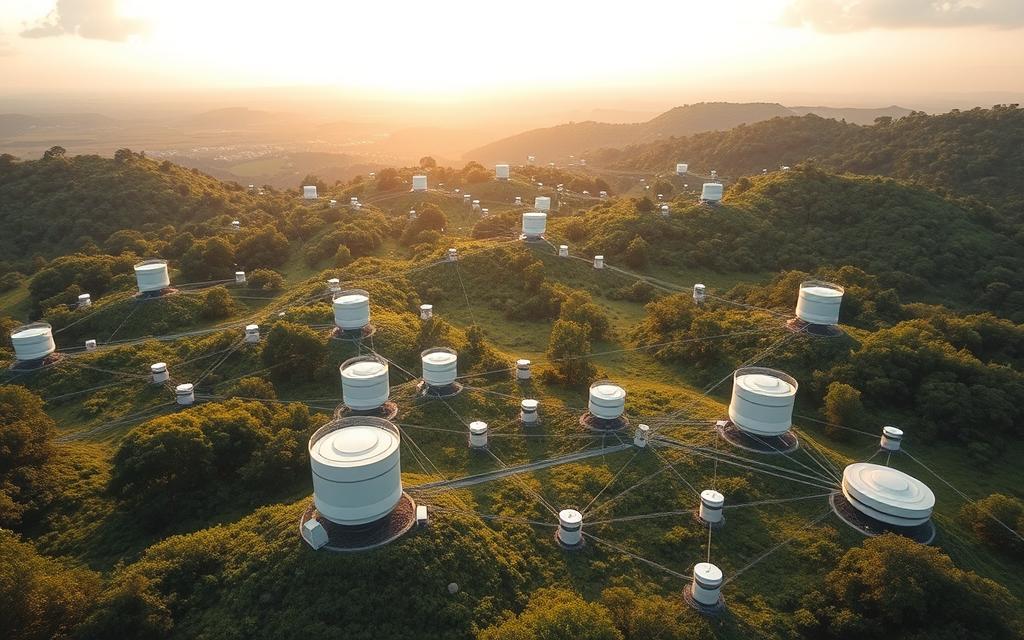
Smart sensors track things like temperature and chemicals. They send this info to platforms for analysis. This brings a new level of clarity to environmental conditions.
Digital platforms share this data with businesses and communities. People can see what’s happening with their environment right now. This helps everyone make better choices.
Conclusion
Environmental technology gives us tools to tackle big global challenges. It helps us move towards a sustainable planet. Innovations like renewable energy, smart water management, and waste reduction are key. They cut down our ecological footprints and help the economy grow.
Using green tech helps companies save money, work better, and look good. While tech can’t fix all environmental problems, it’s vital. It works best when we have good policies and people getting involved.
The future of environmental tech relies on more innovation, money, and teamwork. By using advanced tech like AI and IoT, we can make our economy greener faster. Every step we take now makes the future better for all of us.
FAQ
What is environmental technology?
Environmental technology, also known as green tech or clean tech, is about using tools and systems to reduce harm to the environment. It includes innovations in energy, water, waste, construction, and air quality. The goal is to save natural resources and cut down pollution.
How does renewable energy contribute to sustainability?
Renewable energy, like solar and wind power, doesn’t use up finite resources or pollute. Companies like Demand IQ and Sunrun are making it easier to use. This helps us move towards cleaner energy and lower carbon emissions.
What are some examples of sustainable water management technologies?
Sustainable water management includes advanced purification systems and smart irrigation. Companies like Evoqua Water Technologies are leading the way. These technologies help save water, reduce waste, and tackle water scarcity.
How is technology improving waste management and recycling?
New technologies like advanced sorting and composting are making recycling better. Companies like Full Cycle are helping. These innovations turn waste into useful resources, supporting a circular economy.
What makes building construction more environmentally friendly?
Green building uses sustainable materials and designs that save energy. Companies like Prescriptive Data are involved. This approach reduces waste, cuts energy use, and lowers environmental impact.
How do air quality control technologies work?
Technologies like emission capture systems and air purifiers clean the air. They prevent pollutants and monitor air quality. This helps keep our air clean and healthy.
What role does digitalisation play in environmental sustainability?
Digital tools like data analytics and IoT networks improve resource use. Companies like Prospera Technologies are leading this. These tools help make better decisions and reduce environmental harm.
Are environmental technologies cost-effective for businesses and communities?
Yes, many environmental technologies save money in the long run. They reduce energy and water use, and lower waste costs. They also boost productivity and support sustainability goals.
How has environmental technology evolved over time?
Environmental technology has come a long way, from ancient uses to modern innovations. Today’s tech is the result of centuries of human ingenuity. It aims to make our world more sustainable and efficient.
Can environmental technology alone solve sustainability challenges?
Technology is key, but it needs policy, public engagement, and behavioural changes. A complete approach, combining innovation with societal efforts, is essential for a sustainable future.
 Marcin Wieclaw