

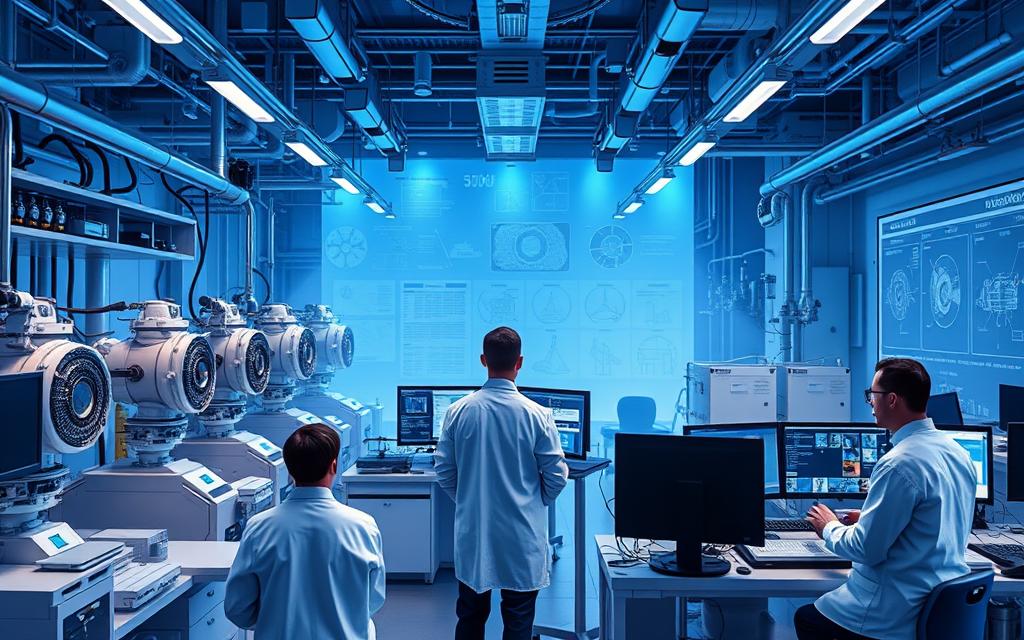
The Democratic People’s Republic of Korea’s quest for nuclear power is a major global concern. To understand this, we must look at complex international networks and the country’s determination.
This study uncovers the secret ways North Korea got its nuclear weapons. Foreign help and clever smuggling networks were key.
North Korea’s nuclear journey shows how isolated countries can get dangerous tech. This story is a lesson in today’s security threats and efforts to stop them.
We will follow these events from the start to now. The world is dealing with the fallout of these tech transfers.
Historical Foundations of North Korea’s Nuclear Ambitions
The start of North Korea’s nuclear programme came from smart partnerships during tense times. Pyongyang’s leaders saw nuclear power as a way to gain strength and protect their rule. They worked hard to get the skills and tools they needed from other countries.
North Korea first tried to get help from Moscow and Beijing in the early 1960s. China was slow to agree, but the Soviet Union saw a chance to help a fellow communist in Asia. This led to the first big Soviet nuclear assistance to North Korea.
Soviet Technical Cooperation in the Cold War Era
Moscow’s offer to train North Korean scientists was a key moment. The Soviets taught them about nuclear physics, reactor tech, and handling radioactive materials. This training helped create North Korea’s first nuclear experts.
The Cold War technology transfer went beyond just learning. Soviet experts helped design reactors and set up safety rules. They said it was for peaceful use, but it also helped with nuclear weapons.
By the late 1970s, North Korea had learned enough to start on their own. Thanks to Moscow, they knew how to keep going without help. This was the start of them taking charge of their nuclear programme.
Related Posts:
- What Are Smart Building Technologies Automation and…

- How Is Technology Transferred From Research to…

- How Assistive Technology Helps Students Tools for…

- What Is Environmental Technology Solutions for a…

- What Is Environmental Technology Solutions for a…

- What Is DNA Chip Technology Microarrays for Genetic Analysis

Establishment of Key Nuclear Facilities at Yongbyon
Kim Il Sung wanted North Korea to make its own nuclear weapons. He chose the Yongbyon nuclear complex as the main place for this work. It was picked for its good location and safety.
The reactor design at Yongbyon was chosen for its benefits in making weapons. It makes plutonium for bombs and is simpler to use than other types. This showed Pyongyang’s aim to not rely on others too much.
Building Yongbyon showed North Korea’s growing skill in nuclear work. They used what they learned from the Soviets to build a working nuclear site. The complex grew to include places to make plutonium for bombs.
This was a big step for North Korea’s nuclear plans. Yongbyon became a key place for their nuclear goals. It showed they moved from just knowing about nuclear stuff to actually making it work.
How Did North Korea Get Nuclear Technology from Pakistan’s A.Q. Khan Network
North Korea didn’t just use plutonium for nuclear weapons. They also enriched uranium, thanks to Pakistan’s A.Q. Khan network. This move greatly sped up their nuclear plans.
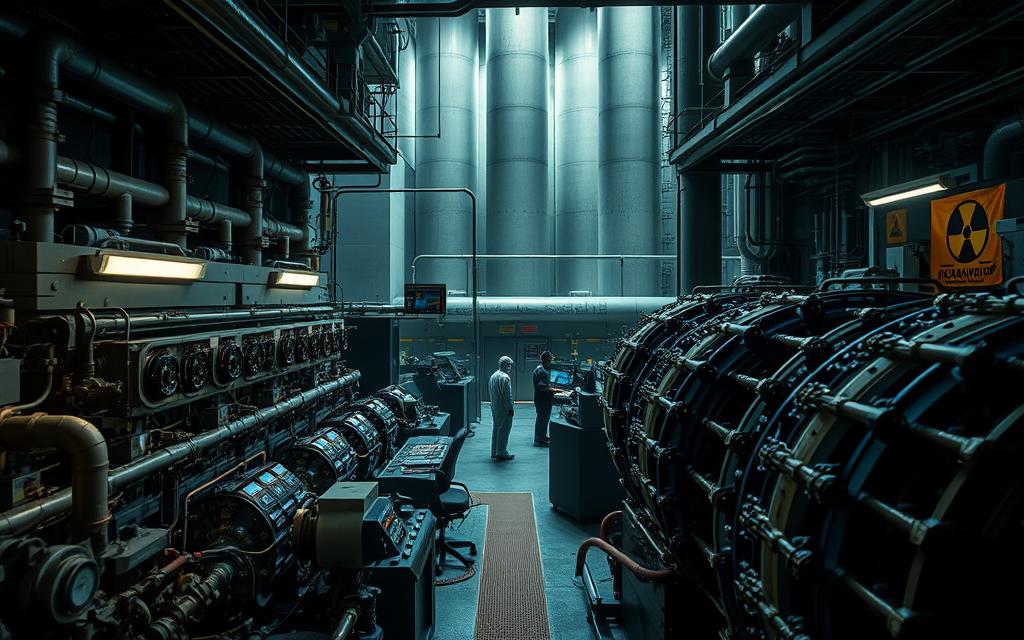
Centrifuge Technology and Design Transfers
In the late 1990s, the U.S. noticed something worrying. North Korea was getting parts for uranium enrichment technology. It was clear they were getting help from Pakistan’s nuclear black market.
The A.Q. Khan network gave North Korea the blueprints for P-1 and P-2 centrifuges. These were the same models Pakistan used. Experts from the network went to North Korea to teach them how to use these designs.
North Korean scientists learned how to build, run, and fix centrifuges. They got not just plans but actual parts and instructions. This helped North Korea start its own uranium enrichment facilities.
| Technology Transfer | Type of Assistance | Estimated Timeframe | Impact on North Korean Programme |
|---|---|---|---|
| Centrifuge Designs | P-1 and P-2 centrifuge blueprints | 1997-2000 | Enabled indigenous centrifuge production |
| Component Transfers | Specialised materials and parts | 1998-2002 | Accelerated enrichment facility construction |
| Technical Training | On-site expertise and knowledge transfer | 1999-2001 | Developed local technical capability |
| Manufacturing Know-how | Production techniques and quality control | 2000-2002 | Established sustainable enrichment programme |
Nuclear Weapon Design Information Exchange
The centrifuge designs were big, but the real game-changer was the weapon design info. The A.Q. Khan network shared key details on nuclear weapon design. This included information on how to make implosion devices and set up weapons.
This info cut years off North Korea’s weapon development time. Scientists could skip the long testing and research phase. This fast-tracked their progress toward making weapons ready for use.
It’s believed the network gave North Korea detailed documents and maybe even computer models. This helped North Korean engineers learn how to make smaller warheads. This was key for making weapons that could be launched by missiles.
This partnership was a classic case of nuclear proliferation. North Korea gave Pakistan missile tech, and Pakistan gave North Korea nuclear know-how. This helped both countries advance their weapons programs together.
Chinese Technological Assistance and Strategic Ambiguity
China’s role in North Korea’s nuclear development is complex and secretive. Beijing denied direct weapons help but allowed technical cooperation through other means. This made their relationship very unclear.
Dual-Use Technology and Component Transfers
China gave North Korea technologies and equipment for both civilian and military use. This way, China could deny any wrongdoing while helping North Korea a lot. North Korea got:
- Precision machine tools for uranium enrichment centrifuges
- High-strength aluminium alloys for centrifuge rotors
- Industrial control systems for nuclear facilities
- Advanced computing equipment for weapons design simulations
These dual-use components helped North Korea’s nuclear program a lot. They did this without Beijing officially helping. The transfers often went through other countries or private companies, making it hard to trace.
| Component Type | Civilian Application | Military Nuclear Application | Transfer Period |
|---|---|---|---|
| Centrifuge Rotors | Chemical processing | Uranium enrichment | 1990-2005 |
| Frequency Converters | Industrial motors | Centrifuge cascade control | 1995-2010 |
| Maraging Steel | Aerospace components | Centrifuge construction | 1980-2000 |
| Vacuum Pumps | Manufacturing systems | Isotope separation | 1990-2010 |
“The line between civilian nuclear cooperation and weapons development assistance became increasingly blurred through the 1990s, with many components serving dual purposes in North Korea’s programme.”
Technical Expertise Through Educational Exchanges
China’s biggest help was through education. Hundreds of North Korean scientists and engineers studied at Chinese universities. These scientific exchanges gave them:
- Postgraduate education in nuclear physics and engineering
- Laboratory training in radioactive material handling
- Computer programming for nuclear simulations
- Materials science for weapons component development
This education made a new generation of skilled people for North Korea’s nuclear program. It looked like peaceful help, but really helped North Korea a lot. This kept China’s official stance of not helping with nuclear weapons.
This Chinese nuclear ambiguity shapes their relationship. Beijing tries to keep the region stable while keeping its influence over North Korea.
Post-Soviet Russian Technical Contributions
The fall of the Soviet Union opened new doors for North Korea in nuclear technology. Economic troubles and broken security systems made it easier for Pyongyang to get what it needed.
Former Soviet Scientists’ Consulting Arrangements
After 1991, many skilled Soviet nuclear experts lost their jobs and were paid poorly. North Korea saw this as an opportunity. They offered high-paying jobs to these experts.
- Critical design expertise for nuclear facilities
- Weapons-grade material production techniques
- Missile propulsion system engineering knowledge
These exchanges looked like normal academic meetings or business partnerships. But they were really about sharing sensitive information. The experts were motivated by money or a dislike for the West.
“The post-Soviet brain drain was a big risk for nuclear security. Skills built over years were sold to the highest bidder.”
Nuclear Material Procurement Networks
Illicit networks in Russia helped North Korea get the parts it needed. These networks were good at:
- Finding parts that could be used for nuclear purposes
- Getting around international rules on exports
- Creating secret paths to hide where things came from
Getting RD-250 missile engines is a good example of how these networks worked. It’s likely that many of these engines were bought illegally in Russia and Ukraine.
North Korea had many contacts in Russia. They even kept up with old networks that had supplied them with Scud and other missiles in the 1980s and 1990s.
| Procurement Network | Materials Provided | Time Period | Primary Methods |
|---|---|---|---|
| Former Soviet Military Suppliers | Missile engines, guidance systems | 1992-2000 | Black market arms deals |
| Nuclear Research Facilities | Enrichment technology, centrifuge designs | 1993-1998 | Technical consulting agreements |
| Industrial Equipment Suppliers | Dual-use machinery, specialty metals | 1991-2005 | Front companies, false end-user certificates |
After the Soviet Union fell, North Korea was able to grow its nuclear program fast. It had the right skills and materials, making it easier to develop weapons.
Cyber Operations for Nuclear Technology Acquisition
North Korea’s nuclear programme has moved beyond old ways to use digital operations. They have built strong cyber skills for getting new tech. This lets them get sensitive info from anywhere, avoiding old smuggling risks.
Cyber Espionage Against Nuclear Research Facilities
North Korean hackers have been going after nuclear research places all over. They aim to get into defence contractors’, universities’, and government labs’ networks. The DPRK cyber espionage uses smart tactics like:
- Spear-phishing attacks on nuclear scientists
- Malware spread through fake software updates
- Keeping an eye on research for a long time
They’ve managed to get into many places studying nuclear stuff. They’ve taken everything from basic research to detailed tech plans.
Digital Blueprint and Technical Data Acquisition
The real prize for North Korea is stealing digital blueprints of nuclear parts. They go after design files, manuals, and test data instead of physical parts. This has big benefits:
- They get the latest tech right away, no need to reverse engineer
- They get whole design packages, not just parts
- It’s safer than smuggling physical stuff
They’ve got software for making weapons, details on centrifuges, and how to test them. This digital way of getting tech speeds up their own making of weapons. It also makes it harder for others to stop them.
“Cyber operations have become North Korea’s most effective tool for getting around sanctions and getting banned tech.”
North Korea’s cyber teams are very skilled and work well together. They use cyber attacks to get what they need, making it hard to catch them. This new way of getting tech shows how states can keep working on nuclear weapons, even with rules against it.
Sanctions Evasion and Covert Procurement Networks
International sanctions have made North Korea smarter at sanctions evasion DPRK. They’ve built global networks to sneak past rules. This is done through secret money moves and fake deals.
Front Companies and Illicit Financial Networks
North Korea uses fake companies in Asia and Europe to hide banned deals. These companies hide in places with weak rules. They make it hard to find out who really owns them.
UN sanctions have made the Kim regime closer to these criminal groups. These groups use secret banks and cryptocurrencies to hide money. They also use lots of cash to avoid being caught.
They also have real-looking trading firms. These firms buy and sell both allowed and banned goods. This helps them get banned tech without being noticed.

Maritime Smuggling and Transshipment Techniques
North Korean ships use clever maritime smuggling to move banned items. They often turn off tracking systems when moving goods. This makes it hard to track them.
They also like to switch cargo at sea. This makes it hard to know where banned goods come from or go to. It’s a trick used by other banned countries too.
Russia is keeping up oil sales. Until recently, it was selling as much oil as before the invasion. Many countries want to buy Russian oil.
Third-country ports are key for hiding where goods come from. Here, papers are changed and boxes are re-packed. This makes it seem like goods come from somewhere else before they reach North Korea.
| Evasion Technique | Primary Method | Detection Difficulty | Common Regions |
|---|---|---|---|
| Shell Companies | Layered ownership structures | High | South-East Asia, Eastern Europe |
| Financial Obfuscation | Cryptocurrency transfers | Extreme | Global digital networks |
| Maritime Transshipment | Mid-ocean cargo transfers | Medium-High | East China Sea, Indian Ocean |
These networks are very good at changing their ways. They keep finding new ways to sneak past rules. This shows how hard it is to stop banned countries just by talking to them.
Conclusion
North Korea’s nuclear programme grew over decades, using many international channels. It didn’t come from one source but from a clever strategy. This strategy used Soviet help, Pakistani tech, Chinese and Russian support, cyber skills, and ways to avoid sanctions.
This complex approach makes old non-proliferation plans seem weak. The world failed to stop North Korea’s nuclear growth. Now, we need new ways to fight against nuclear spread in our global world.
The future of North Korea’s nuclear plans is worrying. They have a big arsenal and keep getting better. Finding peaceful solutions is getting harder as their tech improves.
This situation is very serious for global security. A nuclear North Korea changes how everyone thinks about safety in Asia and beyond. The US, its friends, China, and Russia must talk soon. But time is running out, and we must act fast to stop this danger.
FAQ
What role did the Soviet Union play in the early development of North Korea’s nuclear programme?
The Soviet Union helped North Korea early on. They trained scientists and supported a “peaceful” nuclear energy programme. This help was key to North Korea’s later nuclear weapons development.
How did the A.Q. Khan network contribute to North Korea’s nuclear capabilities?
Pakistan’s A.Q. Khan network gave North Korea uranium enrichment tech. This included designs, parts, and know-how. It helped North Korea make nuclear weapons, alongside their own plutonium programme.
In what ways has China assisted North Korea’s nuclear efforts despite its official non-proliferation stance?
China has helped North Korea in subtle ways. They’ve given dual-use tech and trained scientists. This has helped North Korea’s nuclear goals.
How did the collapse of the Soviet Union affect North Korea’s access to nuclear expertise and materials?
After the Soviet Union fell, North Korea got help from former Soviet scientists. They also got hardware through secret networks in Russia.
What role does cyber espionage play in North Korea’s acquisition of nuclear technology?
North Korea uses cyber attacks to get nuclear tech from abroad. They hack into research facilities and universities. This helps them develop and test their own nuclear weapons.
How does North Korea evade international sanctions to procure nuclear-related materials?
North Korea uses front companies and secret money networks to get what they need. They also smuggle goods by sea and through other countries to hide where things come from and go to.
Why was the Yongbyon nuclear facility significant in North Korea’s weapons development?
Yongbyon was a big step for North Korea. It showed they could make plutonium for weapons on their own. This made them less dependent on others.
Has North Korea’s nuclear success been achieved through a single source or multiple channels?
North Korea’s nuclear success comes from many sources. They’ve used foreign help, secret networks, cyber attacks, and their own will. They haven’t relied on just one thing.
 Sally Miles