

The digital world is full of amazing stories. Many everyday technologies have origins that surprise us. They show us surprising historical paths.
Did you know Mozilla’s Firefox logo is actually a red panda, not a fox? Google handles over 3.5 billion searches every day. Also, more than 90% of the world’s money is digital, not physical.
These technology facts are just the start. We’ll look at accidental discoveries, surprising inventions, and key moments in tech history. These have shaped our world today.
Get ready to explore computing’s growth, mobile tech’s fast pace, and the internet’s quirks. The most amazing stories are often right in front of us.
The Unexpected Origins of Modern Computing
Before silicon chips and digital screens, the roots of modern computing were laid in human ways. The early history of computing shows a journey of brilliant minds and manual labour. This journey led to the technological revolution we see today.
The World’s First Computer Programmer Was a Victorian Woman
In the 1840s, mathematician Charles Babbage and his protegee Ada Lovelace created the first computer program. Lovelace’s work on Babbage’s Analytical Engine showed great foresight into computing machines.
Ada Lovelace’s visionary work on Babbage’s Analytical Engine in the 1840s
Lovelace’s notes on the Analytical Engine were the first algorithm for machine processing. She saw the Engine’s ability to create music and art, predicting modern computers’ versatility over a century before they existed.
Her groundbreaking work was overlooked in her lifetime but is now recognised as a key moment in technology. This history of computers shows how Lovelace’s ideas shaped computer programming.
Related Posts:






When Computers Were Actually People
Before electronic machines, “computer” meant teams of people doing math manually. These human computers were key in science, engineering, and astronomy from the 19th to early 20th centuries.
The original human “computers” who performed complex calculations manually
These teams included skilled mathematicians, many women. They worked for hours, days, or weeks on single problems. Their work was essential for scientific progress.
In World War II, human computers were vital for military calculations. This period marked the shift from human to electronic computation, driven by the need for speed.
The work of these human computers is part of our tech language and understanding today. Their efforts connected theoretical maths to practical computing machines, changing our world.
Revolutionary Inventions That Emerged by Accident
Many of our favourite modern things came about by accident. Scientists who saw the good in mistakes have changed our world. Their stories show how curiosity can lead to big discoveries.
The Microwave Oven’s Sweet Beginning
In 1945, engineer Percy Spencer was working on radar at Raytheon. He noticed a chocolate bar in his pocket had melted. Instead of ignoring it, Spencer looked into it further.
He found that microwave radiation could quickly heat food. This led to the first microwave oven in 1947. It started as a melted snack but changed kitchens forever.

Spencer was very smart about his discovery. He tested it with popcorn kernels and an egg. The egg exploded, but he kept going.
He proved his idea worked. The first microwave, called Radarange, was huge and heavy. It took years for smaller models to become common.
The Post-it Note’s Failed Adhesive
At 3M labs, Spencer Silver was working on a sticky problem in 1968. He made an adhesive that wasn’t sticky enough. But Silver saw its unique qualities.
The adhesive stuck temporarily without leaving marks. For years, Silver tried to find a use for it. Then, Art Fry had an idea for bookmarks.
How Spencer Silver’s “not sticky enough” glue became an office essential
Fry’s idea turned Silver’s failure into a hit. The adhesive was perfect for notes. At first, people were unsure, but 3M’s clever marketing made it popular.
Now, Post-it Notes are a big success. The story shows how sticking with an idea can lead to great things. It’s one of the best accidental inventions ever.
| Invention | Accidental Discovery | Year | Initial Purpose | Final Application |
|---|---|---|---|---|
| Microwave Oven | Melted chocolate bar | 1945 | Radar technology | Food preparation |
| Post-it Notes | Weak adhesive | 1968 | Strong adhesive | Temporary notes |
| Other Accidental Inventions | Various discoveries | Multiple | Different goals | Unexpected uses |
These stories show us that innovation can come from unexpected places. They teach us to be open to new ideas and to see the good in mistakes.
Mobile Technology’s Astonishing Journey
The growth of mobile phones is a remarkable story. It shows how technology has changed from big and heavy to small and light. This change is a testament to human creativity.
The First Mobile Phone Weighed Nearly 1 Kilogram
Today, we find it hard to imagine carrying something as heavy as a book. But, that’s what the first mobile phones were like.
Martin Cooper’s 1973 DynaTAC prototype that started a revolution
On April 3, 1973, Martin Cooper made a call from a handheld phone. His Motorola DynaTAC weighed 1.1 kilograms. It could talk for 30 minutes after 10 hours of charging.
Cooper called his rival at Bell Labs to share his achievement. This call started a revolution in communication. Soon, phones would be in almost every pocket.
Smartphone Power Versus Space Age Technology
Looking at today’s phones and old computers shows huge progress. Smartphones are now incredibly powerful, like science fiction.
Your mobile device possesses millions times more memory than Apollo computers
The Apollo guidance computer had 64 kilobytes of memory. Today’s smartphones have millions of times more. This is amazing progress.
Here are some comparisons between old space tech and today’s phones:
| Specification | Apollo Guidance Computer | Modern Smartphone | Improvement Factor |
|---|---|---|---|
| Memory Capacity | 64 KB | 8 GB+ | 125,000x |
| Processor Speed | 0.043 MHz | 2.5 GHz+ | 58,000x |
| Weight | 32 kg | 0.2 kg | 160x lighter |
| Physical Size | 1 cubic foot | Pocket-sized | 98% smaller |
This shows how fast computing has grown. Your phone today is more powerful than the tech that went to the moon.
The change from Cooper’s big phone to today’s small, powerful ones is huge. This progress is getting faster, promising even more amazing things in the future.
Internet and Digital World’s Hidden Truths
Many of the internet’s key elements came from unexpected places. These stories show how chance and personal taste shaped our online world.
The Web’s First Image Was a Comedy Band Photo
In 1991, Tim Berners-Lee created the first website. He needed to test images, and his choice might surprise you today.
Tim Berners-Lee’s choice of Les Horribles Cernettes for internet history
Berners-Lee picked a photo of Les Horribles Cernettes, a comedy band at CERN. This band sang funny songs about life at the lab.
He chose them because they were the only girls he knew with a digital photo. This choice has become a fascinating part of internet history.
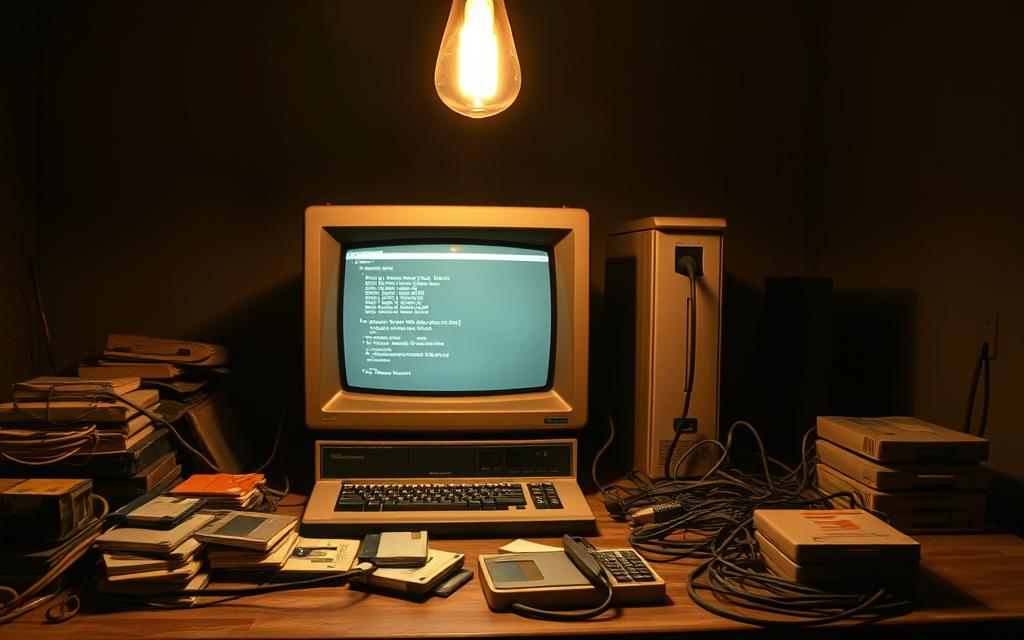
Email Predates the World Wide Web by Two Decades
Email started long before the web. It was a separate technology that came before browsers.
Ray Tomlinson’s 1971 innovation that chose the @ symbol
In 1971, engineer Ray Tomlinson sent the first email. He needed a way to separate names from addresses.
He picked the @ symbol because it meant “at” and wasn’t common in names. This choice has stayed the same in all email systems today.
The table below shows important milestones in early digital communication:
| Year | Innovation | Key Figure | Significance |
|---|---|---|---|
| 1971 | First network email | Ray Tomlinson | Established @ symbol standard |
| 1991 | First website image | Tim Berners-Lee | Demonstrated web multimedia capability |
| 1990 | World Wide Web proposal | Tim Berners-Lee | Launched modern internet era |
| 1970s | ARPANET development | Various researchers | Created foundation for internet infrastructure |
These stories show how personal choices and practical solutions became digital norms. The internet’s history is full of examples where convenience and chance shaped our tech world.
Gaming Technology’s Lesser-Known Histories
The story of video games is full of hidden gems. These untold tales show how gaming technology came from unexpected places. They also highlight how it shaped cultures and economies.
The First Video Game Used an Oscilloscope Display
Before home consoles and arcades, the first interactive game was made. Physicist William Higinbotham created “Tennis for Two” in 1958. It was shown at Brookhaven National Laboratory.
This game used an analogue computer and oscilloscope to play a simple tennis match. Players moved their paddles with custom controllers.
William Higinbotham’s 1958 “Tennis for Two” Scientific Demonstration
Higinbotham made the game to make lab tech more fun for visitors. He never patented it, seeing it as a demo tool, not a product.
The game ran on a Donner Model 30 computer and showed on a 5-inch oscilloscope screen. It was a big step in interactive entertainment.
Space Invaders’ National Economic Impact
Twenty years later, Space Invaders showed the power of video games. It hit Japanese arcades in 1978 and caused a huge craze.
The game’s addictive nature and growing difficulty made it a hit. Arcades were filled with machines, each making hundreds of coins a day.
How Arcade Madness Caused a Genuine Coin Shortage in Japan
Space Invaders was so popular it affected Japan’s money supply. The craze led to a shortage of 100-yen coins across the country.
This unusual situation made the Japanese government increase coin production. It showed how deeply video games had become part of culture.
| Game | Year | Platform | Cultural Impact |
|---|---|---|---|
| Tennis for Two | 1958 | Oscilloscope | First interactive electronic game |
| Space Invaders | 1978 | Arcade | Caused national coin shortage |
| Pong | 1972 | Arcade | First commercial success |
| Pac-Man | 1980 | Arcade | First character-driven game |
These early milestones in video game history show how fast the medium grew. From a lab experiment to a national craze, it’s a remarkable story.
Did you know about technology’s most surprising facts?
There are amazing stories behind tech innovations. These tales show how everyday tools started with different purposes. They reveal the unexpected beginnings of things we use every day.
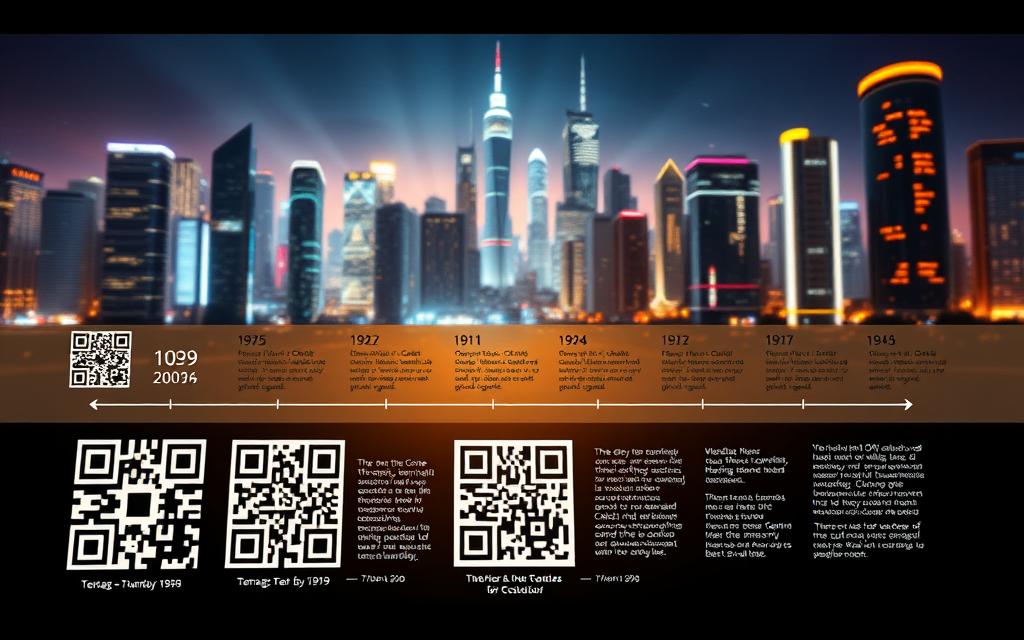
QR Codes Were Born in the Automotive Industry
QR codes are often linked to marketing and payments today. But, they started in car manufacturing. In 1994, Japanese company Denso Wave created them for tracking car parts.
Denso Wave’s 1994 tracking system for Toyota manufacturing
Denso Wave made Quick Response codes for Toyota. They could store more info than old barcodes and scan from any angle. This changed how cars were made before it helped other areas.
The QWERTY Keyboard’s Deliberate Slowdown Design
The QWERTY keyboard is a big mystery. It wasn’t made for speed, but to fix mechanical problems.
Christopher Sholes’ 1878 solution to prevent mechanical typewriter jams
Christopher Sholes invented the first practical typewriter in 1878. He made the QWERTY layout to slow typists down. This stopped typebars from jamming in early typewriters. Today, this layout is a lasting standard.
YouTube Began as a Video Dating Site
YouTube started in a surprising way. Before it became a video sharing site, it was something else entirely.
The platform’s original concept before becoming a video sharing giant
YouTube first launched as “Tune In Hook Up,” a video dating site. It didn’t work, so the founders changed it to video sharing in 2005. This change changed how we watch and share videos online.
These stories show how tech innovations often solve practical problems. From car factories to failed dating sites, the most lasting tech creations start in unexpected places.
Conclusion
The stories shared show a world of innovation. From Ada Lovelace’s code to the microwave’s accidental discovery, progress often surprises us. These moments teach us that change is not always planned.
Learning about this history makes us appreciate today’s technology more. It gives us a tech trivia summary that amazes and teaches us. From old mobile phones to today’s smartphones, we’ve made huge strides.
What’s next in tech? History suggests it will be shaped by chance, creativity, and new discoveries. Keep wondering about the stories behind the tech you use every day.
We encourage you to share your favourite tech facts or predictions. Join the conversation and explore the unexpected stories that shape our digital world.
FAQ
Who is considered the world’s first computer programmer?
Ada Lovelace is seen as the first computer programmer. She worked on Charles Babbage’s Analytical Engine. Her notes included the first algorithm for machine processing.
What was the original meaning of the term “computer”?
Before electronic machines, “computer” meant a team of people. Often women, they did complex math for science and engineering. This role helped start the computing journey.
How was the microwave oven invented?
Percy Spencer at Raytheon accidentally made the microwave oven. He saw a chocolate bar melt in his pocket. This led to microwave cooking.
What is the origin of the Post-it Note?
The Post-it Note came from a “failed” adhesive by Spencer Silver at 3M. A colleague used it for bookmarks. This changed office organisation and note-taking.
How heavy was the first handheld mobile phone?
The first mobile phone, the Motorola DynaTAC, weighed 1.1 kilograms. It’s much lighter than today’s phones.
How does a modern smartphone compare to the Apollo Guidance Computer?
Today’s smartphones have much more memory and power than the Apollo Guidance Computer. This shows how far we’ve come in technology.
What was the first image ever uploaded to the World Wide Web?
The first image was a photo of Les Horribles Cernettes. Tim Berners-Lee chose it for the web’s first image.
When was email first developed?
Email started in 1971 with Ray Tomlinson’s first email. He used the @ symbol to show a user’s location.
What was the first video game and how was it displayed?
“Tennis for Two” was the first video game. It was made by William Higinbotham. He used an oscilloscope for display at Brookhaven National Laboratory.
What impact did Space Invaders have in Japan?
Space Invaders was huge in Japan in the late 1970s. It caused a shortage of 100-yen coins. It had a big cultural and economic effect.
Why were QR codes originally developed?
QR codes started in 1994 by Denso Wave. They were for tracking parts in Toyota’s manufacturing.
Why was the QWERTY keyboard layout designed?
Christopher Sholes made the QWERTY layout. It was to stop jams on early typewriters. It separates letter pairs.
What was YouTube’s original concept?
YouTube was first called “Tune In Hook Up” for video dating. It later became a general video-sharing site.
 Marcin Wieclaw