

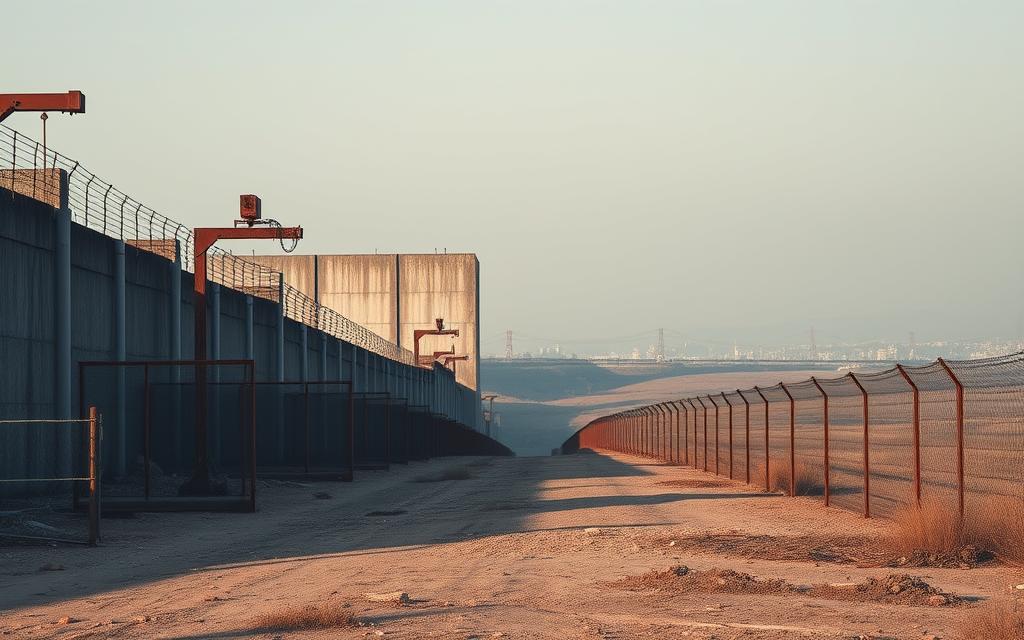
Progress often hits big barriers to development. These stop countries and groups from reaching their goals. They make economic growth challenges that need careful study and smart plans.
The Aspire, Adapt, and Amplify framework helps tackle these issues. It focuses on big dreams, being flexible, and growing good ideas.
Many places struggle with technology adoption problems. Even though digital tools can change things a lot. As tech keeps changing the economic scene, fixing infrastructure and governance is key.
Knowing these big barriers is the first step to making progress and growth for everyone.
Infrastructure and Resource Deficiencies
Policy and economics are just part of the story. Physical and human resources also play a big role. These limitations block progress and growth in many areas.
Physical Infrastructure Gaps
One big problem is the lack of good physical infrastructure. This makes things harder and less efficient for businesses.
Transportation and Connectivity Limitations
Bad roads, slow ports, and limited trains cause big problems. Businesses pay more for transport and take longer to deliver. This makes them less competitive.
Places far from cities face even bigger challenges. They miss out on markets and jobs. This makes economic gaps wider.
Unreliable Energy and Utility Supplies
Power cuts and water shortages mess up work. Without steady power, businesses can’t keep up production.
Related Posts:






Companies spend a lot on backup systems. This eats into profits and scares off investors.
Human Capital Challenges
The quality of a nation’s workforce is key. Yet, human capital development often gets ignored.
Education System Shortcomings
Many countries have education system failures. Students aren’t ready for the job market. Old curricula and not enough money are the main reasons.
Teachers lack the tools and training they need. This makes it hard to improve education without big changes.
Skills Mismatches in Labour Markets
There’s a big skills gap between what schools teach and what employers want. Companies struggle to find the right people.
The digital divide makes things worse, as studies show:
“The digital divide and inequality are big issues. We need better digital infrastructure now. Without it, development is at risk.”
Without digital access, some communities fall behind. They miss out on online learning and remote jobs. This makes economic gaps even bigger.
Fixing physical and human resource issues is key. Tackling both at once is vital for real growth.
Governance and Institutional Weaknesses
Good governance is key to sustainable development. Yet, many countries face weak institutions that block progress. When governments don’t keep up with modern challenges, it’s hard to grow the economy and advance technology.

Regulatory and Bureaucratic Barriers
Complex systems can stop businesses and innovators. Regulatory barriers mean too much paperwork, long waits for approval, and confusing rules. These things stop new businesses from starting.
Excessive Administrative Burdens
Starting a business can be a huge task. Entrepreneurs face lots of paperwork and need many approvals. This bureaucratic red tape makes it hard to focus on innovation.
The digital age has made these problems worse. As one analysis says:
“The rapid pace of technological change requires government adaptation to the digital age. Governments are being forced to adapt their policies and regulations to keep pace with rapid technological advancements, and often these regulations fall behind the pace of technology.”
Inconsistent Policy Implementation
Changes in rules can be unpredictable. This uncertainty makes investors hesitant. They prefer quick gains over long-term plans.
Corruption and Transparency Issues
Lack of accountability leads to corruption in development. This corruption messes up economic incentives and erodes trust in institutions.
Erosion of Public Trust
When systems favour the connected over the meritorious, trust falls. The lack of transparency in decision-making leads to cynicism. This makes people less willing to help with development.
Distorted Investment Incentives
Corruption steers resources to the wrong places. It helps those in power, not the most efficient or innovative. This stops real competition and hinders progress.
| Governance Challenge | Economic Impact | Technological Consequence |
|---|---|---|
| Complex regulations | Reduced foreign investment | Slower tech adoption |
| Policy inconsistency | Uncertain business environment | Limited R&D funding |
| Corruption systems | Distorted market competition | Innovation suppression |
| Transparency deficits | Reduced public investment | Limited digital transformation |
These weaknesses create a cycle where poor institutions hold back development. This weakens institutions even more. To break this cycle, we need to fix both the rules and how accountable we are.
Economic System Constraints
Economic systems can block development in many ways. The structures meant to help growth can actually hinder it.
Financial Market Limitations
Many economies face big financial market limitations. These limit new businesses and ideas. They affect two main areas badly.
Limited access to venture capital
The venture capital shortage is a big problem for startups, mainly in tech. Without enough money, good ideas don’t get off the ground. Entrepreneurs often have to use their own money or rely on friends and family.
Startups struggle to get the access to finance they need to grow. Without strong venture capital, many new ideas don’t get the funding they need.
Underdeveloped banking sectors
Traditional banks often don’t help new businesses well. They’re too careful and prefer safe industries. This makes it hard for entrepreneurs to get the money they need to grow.
Banks need to change to help modern businesses. They should offer services that fit the needs of tech startups and knowledge-based companies.
Market Structure Problems
Even with funding, businesses face market issues that limit growth. Problems in the market can stop competition and new ideas.
Monopolistic practices
Big companies often act unfairly to keep others out. They use things like low prices and exclusive deals to stop new businesses. This monopolies hindering growth hurts innovation and choice for consumers.
Big companies focus on keeping their power instead of improving. This leads to higher prices, lower quality, and less innovation.
Inadequate competition policies
Many places don’t have strong rules for fair competition. Weak rules let big companies get even bigger and stop new ones. Without good rules, markets become less open and less dynamic.
These problems can lead to new economic models. The gig economy is one example, as seen in recent research. While it offers flexibility, it also creates unstable work conditions.
“The gig economy… poses challenges regarding traditional models of employment. While the gig economy offers more flexibility… workers lack the job security, benefits, and legal protections… leading to greater income inequality and disrupting traditional labour markets.”
This shows how economic problems can lead to new solutions. But these new solutions also bring their own challenges. We need policies that tackle both old and new problems.
Technological Adoption Barriers
Societies face big challenges in adopting new technologies. These digital adoption barriers stop us from using technology to its full. This gap between what’s possible and what’s done is growing.

Digital Infrastructure Gaps
Good digital infrastructure is key for progress. Without it, communities can’t join the digital world.
Internet access disparities
Internet access inequality is a big problem. Many places lack fast internet, making them digital deserts.
This issue affects education, healthcare, and jobs. It creates two worlds: one with internet access and one without.
Technology cost prohibitions
Expensive tech stops small businesses and people from using new tools. This financial wall blocks change.
Subscription costs and licensing fees add to the problem. Starting up in new markets is hard because of these costs.
Cultural and Organisational Resistance
Change is hard for people and organisations. They find it hard to adapt to new technology.
Technophobia and change aversion
Many fear new technology. This fear slows down how fast we adopt it.
“There is a gap between the rate at which technology develops and the rate at which society develops.”
This gap makes us stick to what we know. It’s easier to stay with what’s familiar than to try something new.
Legacy system dependencies
Old systems hold back change. The cost of keeping them makes change seem too risky.
Old and new systems don’t always work together. This makes changing systems hard and scary.
An expert says, “Digital skills are key today.” But we need to fix both our tech and our mindset to move forward.
What Caused Technological and Economic Development to Suffer: Historical Factors
Historical factors often shape today’s development challenges. Knowing these roots helps us understand current economic and technological issues.
Colonial and Post-Colonial Legacies
Many areas got stuck with economic systems made for taking out resources, not for growth. Colonial powers set up systems that focused on taking out resources, not building local skills.
Extractive institution persistence
These extractive institutions stuck around after freedom. Leaders often kept systems that helped a few, not the whole nation.
This led to a cycle where investing in public goods was ignored. Wealth went to the few, not to innovation.
Resource curse phenomena
The resource curse shows how natural wealth can actually block progress. Economies that focus on extracting resources often ignore other sectors.
This focus stops diversification and new tech. It can cause income to swing wildly and weaken institutions over time.
Global Economic Positioning
Old trade patterns set up lasting economic ties. Many developing countries were stuck in the back of the global system.
Peripheral role in global value chains
Many economies are stuck in global value chains in low-value roles. They mainly do raw material extraction.
This limits tech sharing and skill growth. It’s hard for them to move to more valuable tasks.
Unfavourable trade terms
Old trade deals often gave trade disadvantages to developing nations. They faced unfair exchange deals.
These issues last due to price swings and market barriers. The deals usually help richer countries more.
These historical issues create big historical development barriers that slow down economic growth today.
Conclusion
Development barriers are complex, from infrastructure gaps to governance issues. To overcome these, we need a detailed plan. This plan should tackle both old problems and new ones.
The “Aspire, Adapt, and Amplify” framework is a good guide for progress. It involves setting big goals, making solutions fit local needs, and growing successful projects. For economic growth, we need teamwork between governments and businesses, education for all, updated rules, digital access, and ethics.
The future of technology depends on strong systems that can handle big changes. Governments, companies, and communities must work together. With united efforts, we can turn challenges into chances for lasting growth.
FAQ
What are the main barriers to technological and economic development?
The main barriers include poor infrastructure and weak governance. Economic systems also play a role. Slow adoption of technology and historical issues like colonial legacies are other factors. These issues often work together, making it hard to move forward.
How does poor infrastructure affect economic growth?
Bad infrastructure, like poor transport and unreliable power, raises costs. It also disrupts business and isolates markets. Digital infrastructure issues limit online access, widening inequality and slowing growth.
What role does governance play in development challenges?
Weak governance, with its inefficiency and corruption, scares off investors. It distorts markets and erodes trust. This diverts resources, hindering sustainable development.
Why is there often a skills mismatch in developing economies?
Education systems often lack modern skills. This means workers can’t meet employer needs, limiting productivity. It’s a big problem in a fast-changing world.
How do financial market limitations hinder entrepreneurship?
Lack of funding for startups and small businesses stifles growth. Banks struggle to support new, tech-focused ventures. This leaves many ideas underfunded and unable to grow.
What is meant by ‘cultural resistance’ to technology adoption?
Cultural and organisational resistance is a fear of new technology. It’s about sticking to old systems and worrying about costs. This slows down progress and makes businesses less competitive.
How have historical factors influenced current development barriers?
Colonial and post-colonial legacies have left behind bad economic models. Being on the periphery of global value chains also limits access to new technologies.
What is the ‘Aspire, Adapt, and Amplify’ framework in overcoming these barriers?
This framework suggests setting big goals, being flexible, and scaling up successes. It’s about working together across sectors to make real progress.
Why is digital inclusion important for economic development?
Digital inclusion lets everyone and businesses join the modern economy. Without access to the internet and technology, inequality grows. It limits opportunities and slows down innovation.
How can collaboration between sectors address these development challenges?
Working together between governments, businesses, and civil society is key. It helps share resources and expertise. This approach is vital for creating inclusive policies and solving deep-rooted problems.
 Marcin Wieclaw