


The journey from lab discovery to market-ready product is key in modern innovation. This technology commercialisation process links academic research to practical uses that help society.
Technology transfer is a cycle, not a straight line. New research pushes innovation, leading to products and services. These successes fund more research.
This cycle keeps great ideas out of journals and into the hands of users. They move through the innovation pipeline to reach consumers and businesses.
Turning research to market needs teamwork. Scientists, business experts, and investors all play key roles. They turn ideas into solutions for real problems.
This complex process shows how economies grow through innovation. It shows how knowledge becomes real products.
The Fundamentals of Technology Transfer
Technology transfer moves intellectual property from labs to markets. It makes sure valuable discoveries help people and businesses. This way, they can make a real difference.
Defining Technology Transfer and Its Importance
The technology transfer definition is about sharing skills, knowledge, and technologies. It connects research with real-world use.
This process is key in today’s fast-paced world. It turns research into useful products and services. This helps the economy grow, creates jobs, and solves big problems.
Universities spend a lot on research. Technology transfer makes sure this research pays off. It helps turn ideas into things we can use every day.
Related Posts:






The technology transfer process has big goals. It aims to make sure ideas are used well in the market.
- Protection of intellectual property through patents, copyrights, and trademarks
- Facilitation of IP commercialisation that benefits both inventors and society
- Establishment of fair licensing agreements that reward innovation
- Acceleration of market entry for new technologies and products
- Creation of sustainable revenue streams for further research investment
These goals help create a cycle of innovation. When IP commercialisation works well, it funds more research. This leads to new discoveries and more technology transfer.
Stakeholders Involved in Technology Transfer
Many groups work together in technology transfer. Each brings their own skills and resources.
Key players are inventors, technology transfer offices, industry partners, investors, and government agencies. They work together to bring ideas to life.
Good teamwork is key to success. Clear communication and shared goals are essential for strong partnerships.
Roles of Universities, Research Institutions, and Industry Partners
Universities are key in creating new ideas. Places like the University of Toronto help researchers while protecting the university’s interests.
Research institutions focus on growing knowledge. They have teams that help inventions, manage patents, and make deals.
Industry partners bring market know-how and resources. They turn ideas into products that people want.
Universities and industries need to understand each other. Universities want to advance knowledge and protect freedom. Industries look for market chances and profits.
This partnership is good for everyone. Researchers see their work used. Companies get new ideas. And society gets products that solve problems.
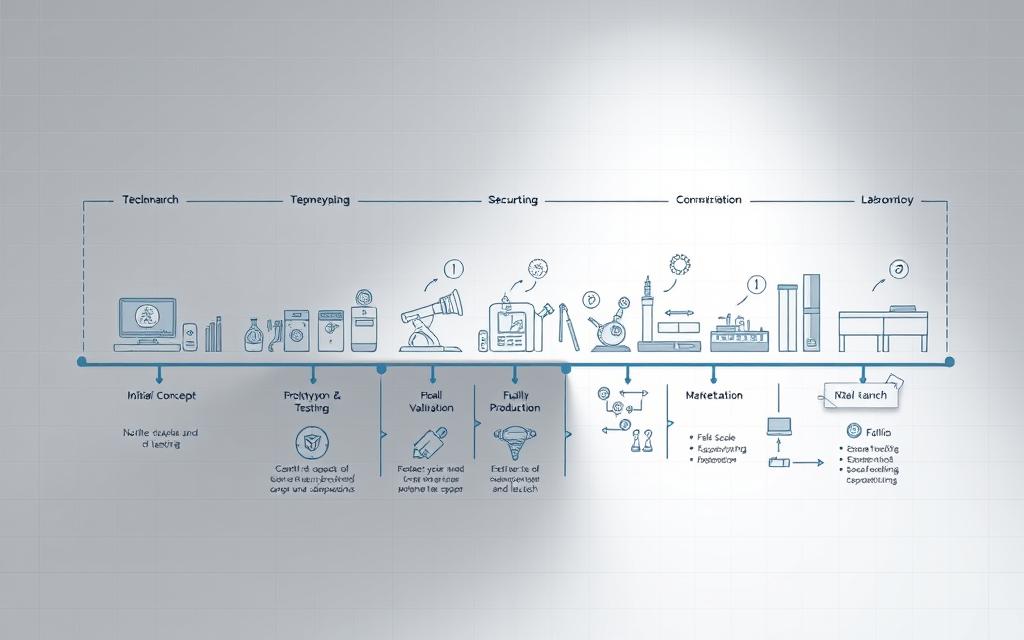
Phases of How Technology Is Transferred
The journey from lab discovery to market innovation is structured. This ensures research breakthroughs reach their full commercial value.
Initial Research and Discovery Phase
This stage starts with scientific exploration. Researchers find promising technologies with market uses.
Identifying Commercially Viable Technologies
Invention disclosure forms record new discoveries. Committees then check if they’re market-worthy and technically feasible.
Showing new tech too early can risk patent rights. Institutions keep strict rules to protect ideas.
Protection of Intellectual Property
Legal protection is key for successful commercialisation. This phase turns ideas into assets that can be defended.
Patents, Trademarks, and Other IP Protections
Patents protect inventions for a set time. Trademarks safeguard brand names and product names.
Copyrights cover written works and software. Trade secrets keep confidential business info safe.
Timely filing is vital for patent protection. Most places follow a first-to-file system.
Licensing and Agreements
This phase links protected tech with commercial partners. Agreements outline rights, duties, and how profits will be shared.
Negotiating Terms with Commercial Entities
Technology transfer offices help with these talks. They balance inventor needs with business realities.
Options agreements give short evaluation times. Licensing agreements allow specific use rights.
Assignment agreements transfer full ownership. Each type supports different business strategies.
| Agreement Type | Primary Purpose | Typical Duration |
|---|---|---|
| Option Agreement | Evaluation period | 6-12 months |
| Exclusive License | Sole commercial rights | Patent term |
| Non-Exclusive License | Multiple users | Negotiated term |
| Assignment | Full ownership transfer | Permanent |
Revenue sharing models split earnings between inventors, departments, and institutions. This encourages more innovation and supports research.
Models and Strategies for Successful Transfer
Choosing the right way to move innovations from the lab to the market is key. Organisations must pick a model that fits their technology’s needs and resources.
Common Transfer Models: Licensing, Spin-offs, and Collaborations
There are three main ways to bring research to market. Each offers a different path to success, with its own risks and needs.
Advantages and Disadvantages of Each Model
Technology licensing is a simple way to share ideas. It lets companies use your research and pay you for it. This can bring in money right away.
But, you might lose control over your idea. The success depends on the company using it.
Spin-off companies start new businesses to use research. This way, inventors keep control and can earn more. But, starting a new business is hard.
It needs money, a team, and business skills. Getting into the market is tough for new companies.
Research collaborations share knowledge and risks. They mix university smarts with industry know-how. This speeds up progress.
But, managing who owns what and avoiding conflicts is tricky. Different cultures and goals can cause problems.
| Transfer Model | Key Advantages | Potential Disadvantages | Ideal For |
|---|---|---|---|
| Technology Licensing | Immediate revenue, lower risk, existing infrastructure | Limited control, dependent on licensee commitment | Technologies needing established distribution |
| Spin-off Companies | Full value capture, control over development | High resource requirements, business building challenges | Disruptive innovations with large market |
| Research Collaborations | Shared risk, combined expertise, accelerated development | IP management complexity, cultural differences | Early-stage technologies requiring further development |
Best Practices for Effective Technology Transfer
Good technology transfer programs share some key traits. These traits help make success more likely and risks smaller.
- Early market assessment to validate commercial
- Clear intellectual property protection strategies
- Experienced technology transfer office support
- Flexible agreement structures that accommodate changing circumstances
- Ongoing relationship management between all parties
The OVPRI helps with licensing and funding. This support is very helpful for researchers.
Case Studies of Successful Transfers
Google started as a Stanford project. It shows how research can change industries. The founders got the rights to the search algorithm.
Pfizer’s COVID-19 vaccine shows the power of partnerships. BioNTech’s research and Pfizer’s skills made the vaccine fast. They managed the complex IP well.
University offices help with licensing deals. These deals can benefit both sides. They often include payments and royalties.
The best path to market depends on the technology and market. Each success story shows the importance of choosing the right model.
Challenges and Barriers in Technology Transfer
Organisations face big hurdles when trying to turn research into real products. These problems decide if new tech makes it to the market or stays in labs. Knowing these challenges helps find ways to overcome them.
Regulatory and Compliance Hurdles
The rules around technology transfer are very complex. Companies must follow different laws in various places and sectors. This needs a lot of knowledge and money, which many labs don’t have.
Navigating International and Domestic Regulations
Going global with tech means dealing with many laws at once. Patent rules vary greatly between countries, making things harder. Export rules and tech transfer laws add more complexity to working across borders.
Home rules also pose big challenges. Labs must follow national patent rules and sector-specific laws. The medical tech field, for example, has strict checks from bodies like the FDA and EMA.

Technology transfer offices often find it hard to keep up with changing laws. They need people and systems to watch for new rules. Many places don’t realise how much time and effort it takes to follow all the rules.
Financial and Resource Constraints
Money is a big problem in technology transfer. The cost of protecting and developing new ideas often goes beyond what’s available. Many good ideas don’t get off the ground because of lack of funds.
Funding Options and Investment Strategies
There are ways to get money for tech development and making it ready for market. Early-stage grants help show if an idea works. These grants help move ideas to higher levels of readiness.
Venture capital is also key for promising tech. VC firms look for ideas with strong market chances and clear ways to make money. Working with industries can also bring in money and know-how.
Universities and labs are starting their own funds for tech. These funds help get ideas from research to investment. Using these funds wisely can make a big difference in getting tech to market.
Choosing the right funding depends on the tech’s stage and readiness. Different funding is needed for early stages versus when it’s almost ready. Having a mix of funding helps manage risks during development.
| Funding Type | Best For TRL Level | Typical Amount | Key Considerations |
|---|---|---|---|
| Proof-of-Concept Grants | TRL 3-4 | £25,000-£100,000 | Technical feasibility demonstration |
| University Seed Funds | TRL 4-6 | £50,000-£250,000 | Early development and prototyping |
| Venture Capital | TRL 6-9 | £500,000+ | Market and scalability |
| Corporate Partnerships | TRL 5-8 | Varies by agreement | Strategic alignment and IP terms |
Getting funding right means knowing what each option offers. Using different funding sources can be the strongest support. Timing funding right with tech milestones is also key.
Overcoming these challenges needs careful planning and using resources well. Good management of rules and smart funding can lead to success. Companies that tackle these issues can get their tech to market.
Conclusion
The process of technology transfer offers a clear path from research to real-world use. It turns new ideas into useful products and services for everyone.
Researchers get a lot from making their work useful. They become more known, team up with industries, and might even earn money. These wins help the whole research world.
Universities gain a lot too. They make better partnerships, earn money for more research, and boost innovation. This makes their reputation and research skills stronger.
The public wins big from new research being used. Technology transfer makes sure important discoveries help people. Working with tech transfer offices helps researchers make a bigger difference for everyone.
FAQ
What is technology transfer and why is it important?
Technology transfer moves research findings into the market. It’s a key link that turns scientific discoveries into useful products or services. This process boosts innovation, drives economic growth, and makes research useful to society.
Who are the key stakeholders involved in technology transfer?
Key players include inventors, universities, technology transfer offices, and industry partners. Inventors share their discoveries, universities protect the ideas, and companies use the technology. Each group has a unique role in the process.
What are the main phases of the technology transfer process?
The process has three main stages. First, researchers find and share commercially viable technologies. Next, they protect these ideas with patents and copyrights. Lastly, they work out agreements with companies to bring the technology to market.
How is intellectual property protected during technology transfer?
Intellectual property is safeguarded with patents, trademarks, and copyrights. It’s important to file an invention disclosure early to keep patent rights. Universities, like the University of Toronto, have guidelines to help researchers with this.
What are the common models for transferring technology?
There are several ways to transfer technology. Companies can license the technology, start a spin-off, or collaborate with academia. Each method has its benefits, like quick market entry or shared expertise.
What challenges are typically faced in technology transfer?
Challenges include dealing with complex laws and finding enough money. The cost of patenting and improving a technology can be high. These hurdles can stop researchers and institutions.
How can researchers overcome financial barriers in technology transfer?
Researchers can get funding from grants, venture capital, or partnerships. Working with technology transfer offices early can help find the right funding. This support is key for development and commercialisation.
What role do technology transfer offices play in the process?
Technology transfer offices help at every step. They guide with invention disclosures, protect intellectual property, and negotiate agreements. They also connect researchers with industry partners for successful commercialisation.
Why is it important to file an invention disclosure before public presentation?
Filing a disclosure before public sharing is vital to keep patent rights. Publicly sharing an invention too early can make it unpatentable. This is because it becomes prior art.
What are the benefits of successful technology transfer for researchers and institutions?
Successful transfer brings recognition, collaboration, and royalties for researchers. For institutions, it improves the research environment, builds industry ties, and generates funds. This creates a cycle of innovation and growth.
 Marcin Wieclaw